

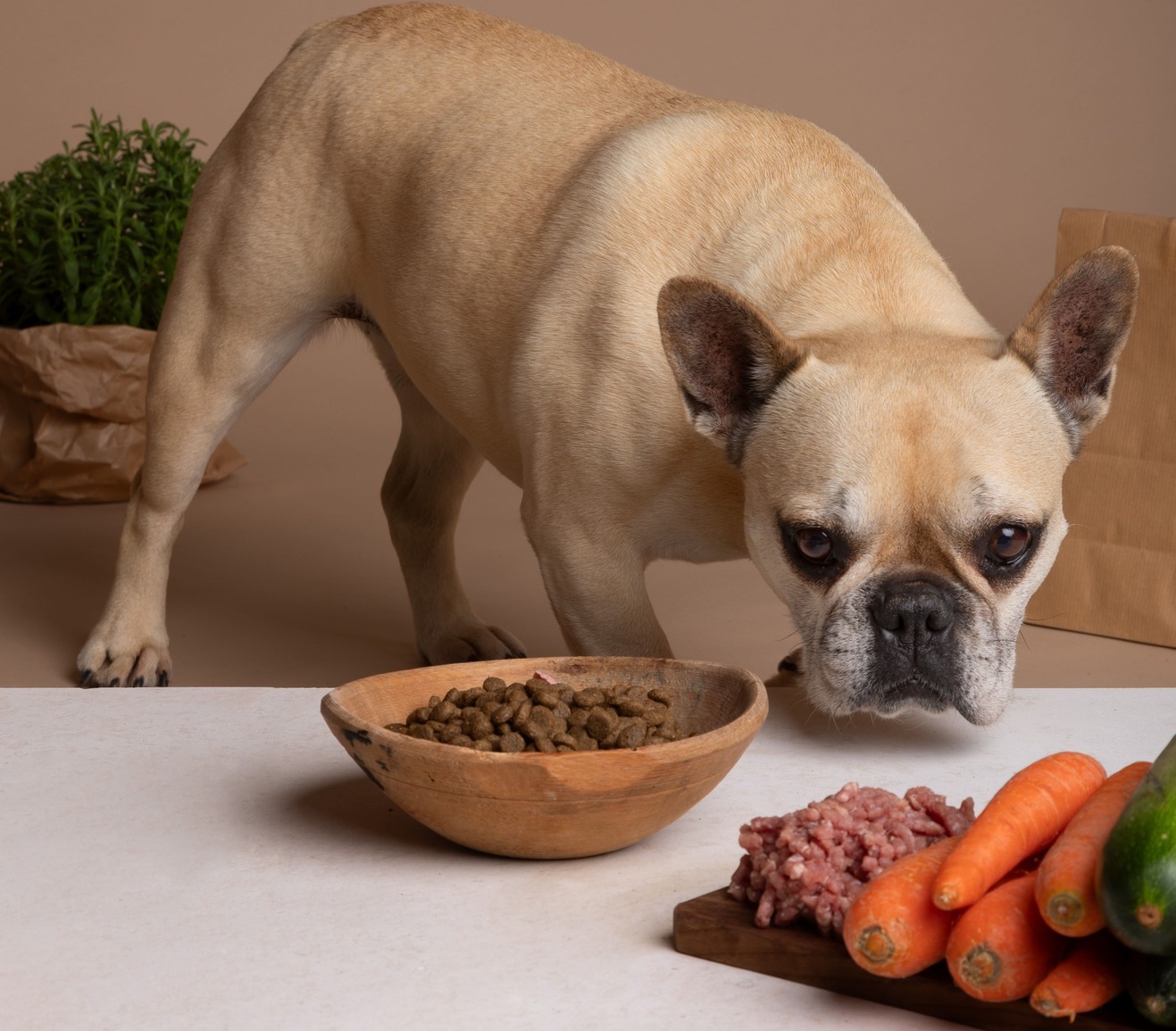
Choosing pet food should feel simple. In reality, the average food label can leave even experienced pet parents comparing percentages, ingredient lists, protein claims, grain-free badges and feeding charts without knowing which details matter most.
The best food is not determined by a single claim. High animal content, protein levels and ingredient quality are all important, but they should must first be complete, alongside nutritional balance, digestibility, life stage suitability and overall formulation, suitable for your pet’s species and life stage, made with reliable quality controls, digestible for the individual pet and fed in an amount that maintains a healthy body condition.
Quick answer
A strong everyday pet food should meet five basic tests:
Five tests for a strong everyday pet food
- It is labelled as complete food, not only a treat, topper or complementary food.
- It is intended for your pet’s species and life stage.
- It provides clear calorie and feeding information.
- It comes from a manufacturer that can explain who formulates the food, how it is tested and how quality is controlled.
- Your pet maintains a healthy weight, good muscle condition, normal stools, a healthy coat and steady energy while eating it.
High animal content and grain-free claims can be useful details, but they should never replace these fundamentals.
How to choose pet food in seven practical steps
Step 1: Identify the pet in front of you
Write down species, age, life stage, current weight, ideal weight, activity, neuter status, health conditions and any symptoms.
Step 2: Choose a complete food for that species and life stage
Confirm that the pack identifies the food as complete. Do not use treats, toppers or complementary foods as the main diet unless they are combined according to a professionally formulated plan.
Step 3: Check calories and portion guidance
Find the calories per kilogram and per serving. Decide how the daily amount will be measured.
Step 4: Evaluate the company, not only the recipe name
Look for access to qualified nutrition expertise, robust quality controls, finished-product nutrient analysis and responsive customer support.
Step 5: Review the nutrient profile and ingredients in context
Consider protein, fat, fibre, moisture, animal content and grain choice together. Avoid judging the food from one number or one ingredient.
Step 6: Transition gradually
Change over at least 4 to 7 days for many healthy pets, and more slowly when needed.
Step 7: Monitor and adjust
Track weight, body condition, muscle condition, appetite, stools, vomiting, coat quality and energy. Review the plan with a veterinarian at routine visits or sooner when concerns appear.
Choosing from Yomzy’s range
Yomzy carries complete dry and wet foods across different species, sizes and life stages. Use the same evidence-based checklist when comparing them.
For cats that benefit from added dietary moisture, a complete wet food such as Half&Half Adult Cat Wet Food with Duck in Sauce can be considered as a full meal or as part of a measured mixed-feeding plan.
For growing dogs, choose a formula that clearly matches growth and expected adult size. TRAMP offers puppy formulas for small and medium dogs as well as a separate large-breed puppy option.
For adult and older dogs, ALMI and TRAMP offer formulas organised by size and life stage. Match the product to the dog’s current needs, then verify calories and monitor body condition rather than assuming the pack category alone guarantees the right portion.
For sterilized cats or pets with specific weight concerns, compare calorie density, complete-food status and the feeding guide. Half&Half includes sterilized cat wet food options, while Yomzy’s wider range includes formulas positioned for weight, urinary and digestive support.
Product availability and recipes can change. Always read the current pack and product page before purchase, and speak with your veterinarian when your pet has a medical condition.
Common pet nutrition mistakes to avoid
Choosing only from the first ingredient
The first ingredient cannot describe the whole formula or the quality of the finished food.
Assuming high protein means high quality
Protein must be digestible, balanced and appropriate for the pet.
Treating grain-free as a health claim
Grain-free describes what is excluded. It does not prove that the food is better.
Using treats as a major calorie source
Treats can unbalance the diet and contribute to weight gain when they exceed a small part of daily calories.
Changing foods too quickly
A sudden change can cause digestive upset and make a suitable food appear unsuitable.
Feeding the same amount after changing products
Two foods can have very different calories per cup, can or pouch.
Ignoring body and muscle condition
The feeding chart is only a starting point. The pet’s response is the real measure.
Adding supplements to a complete diet without a reason
Extra vitamins and minerals can create imbalances or toxicity. Use supplements only when there is a clear need and an appropriate dose.
Frequently asked questions
Is high animal content always better?
No. High animal content can be a useful feature, but it does not show whether the food is complete, properly balanced, digestible or suitable for the pet’s life stage. Review the full formula and manufacturer information.
Is grain-free food better for dogs and cats?
Not automatically. Properly processed grains can provide useful nutrients and energy. Choose grain-free food for a clear individual reason, not because grains are assumed to be harmful.
How much protein should pet food contain?
There is no single ideal percentage for every dog or cat. Species, age, life stage, calorie intake, protein quality, activity and health all matter. Use a complete food and seek veterinary advice for medical conditions.
Is wet food better than dry food?
Both can provide complete nutrition when correctly formulated. Wet food provides more moisture and may help some pets with hydration or palatability. Dry food can be convenient and calorie-dense. The best option is the one that meets the pet’s needs and is fed in the correct amount.
Can I mix wet and dry food?
Yes, provided both are appropriate and the combined calories are measured. Do not give the full recommended amount of each food, since that can double the intended intake.
How do I know whether I am feeding enough?
Start with the label guide, then monitor weight, body condition and muscle condition. Adjust the portion when the pet gains or loses unintended weight, and ask a veterinarian for a calorie target when needed.
How often should I change my pet’s food?
There is no requirement to rotate food on a fixed schedule. A healthy pet can remain on a suitable complete diet. Change when nutritional needs, health, tolerance, availability or veterinary recommendations change.
How long should a food transition take?
Many healthy pets can transition over 4 to 7 days. Sensitive pets may need 10 to 14 days or longer. Slow down if mild digestive signs appear and contact a veterinarian for persistent or severe symptoms.
When should I ask a veterinarian about nutrition?
Ask whenever your pet has ongoing digestive signs, skin problems, weight change, poor appetite, muscle loss, a medical diagnosis, pregnancy, unusual growth, or difficulty maintaining an ideal body condition.
Final thoughts
Good pet nutrition is not about finding one perfect ingredient or chasing the highest number on the pack. It is about choosing a complete diet that fits the individual pet, feeding it in the right amount and checking how the pet responds over time.
Start with species and life stage. Confirm that the food is complete. Look at calories, manufacturer standards, digestibility and nutrient balance. Then use animal content, protein, grains and individual ingredients as supporting information rather than shortcuts.
When you choose with this order of priorities, pet food labels become easier to understand and marketing claims become easier to place in context. Most importantly, your dog’s or cat’s real condition becomes the centre of the decision.
Browse Yomzy’s dog and cat food ranges by species, life stage and nutritional need, then confirm the current product label before feeding. For pets with symptoms or diagnosed conditions, involve your veterinarian from the beginning.
Medical note
• This article provides general educational information and does not replace an individual veterinary assessment, diagnosis or feeding plan.